Breed of Speed
  • Home
  • Breed of Speed Blog
  • BOS Speed Store
  • Contact US

Breaking News: Erik Roner Dies In Skydiving Accident

9/28/2015

 
Picture
1:00 PM MST, Jackson Hole, Wyoming: According to two different sources, we have just learned that legendary action sports athlete Erik Roner has died in a skydiving accident in Lake Tahoe, California. Roner was part of a group of four skydivers that included JT Holmes and Aaron McGovern who were the opening act of a golf tournament in the Lake Tahoe area today. Roner reportedly hit a tree at high speed as he was coming in for a landing, and either died immediately or shortly succumbed to his injuries. 

According to Roy Tuscany, founder of the Lake Tahoe-based High Fives Foundation and a witness at the scene along with a crowd of approximately 120 others at the golf tournament, McGovern landed first, followed by JT, and then Roner followed but hit a tree close to the landing zone. "He hit a tree... he hit a tree so hard. I don't know what happened from there," said an obviously choked-up Tuscany over the phone from Truckee. 

Roner, who has starred in multiple TGR films over the years and has been a prolific figure in the wider action sports community, leaves behind two amazing children and a lovely, loving wife. "That's the most important thing that needs to resonate amongst everyone," Tuscany said. "That Erik had an amazing family–two beautiful, beautiful kids and an amazing wife."

We will update this story as relevant details become available. Rest in peace, Erik. Our thoughts and prayers are with you, your loving family, and your friends at this hour. 



Picture

The Time A Tanker Saved A Fighter That Was Falling Apart Over The Atlantic

9/28/2015

 
Picture
On the 5th of September, 1983, 4 USAF F-4E Phantom jets were flying over the Atlantic en route to Europe along with the support of a KC-135 known as “North Star.” These five aircraft were part of a larger number of Phantoms and tankers on a routine trans-Atlantic flight. To make the crossing, the Phantoms would need to tank a total of 8 times to fill their thirsty engines.

Confessions Of A USAF KC-135 'Flying Gas Station' Boom OperatorIt is one of the coolest jobs in the entire U.S. military, "Booms" as they are

Midway across the Atlantic, and just prior to the fourth refuel, one of the F-4Es piloted by Maj. Jon “Ghost” Alexander and his Weapons Systems Officer started to develop some engine problems. After a quick visual from one of the other Phantoms, it was discovered Ghost’s F-4E was bleeding oil. The emergency divert base at Gander, Newfoundland was contacted with an emergency declaration.

Shortly after, things began to rapidly deteriorate when the still turning, but barely burning turbines started to wind down. The Phantom, which is known for its dependence on power to keep flying through the sky, started to bleed airspeed and altitude simultaneously. 

At this point, with the number two engine barely hanging on, the number one began to struggle with the higher temperatures and load of keeping the Phantom airborne. Watching the airspeed decay, Ghost decided to jettison his external tanks to reduce drag and weight in hopes of saving his dying jet.

Struggling with a dying number one, and an overheating number two, all the while maintaining a 45-degree nose-up attitude to keep far away from the frigid Atlantic beneath. But sadly for Ghost and his WSO, things were about to go even further south. Moments after dropping his tanks, his jet’s hydraulic system failed, crippling the stricken jet even further. The list of available options was reduced to one.

Eject.

Still 520 miles out of Gander, and facing a certain death in the waters below, “North Star” KC-135, crewed by Captain Robert Goodman, Captain Michael Clover, First Lieutenant Karol Wojcikowski and Staff Sergeant Douglas Simmons pulled high and in front of Ghost’s Phantom, dropping flaps and slats to slow to the speed of the crippled jet. 

As the altitude dropped to 4000 feet over the water, North Star hooked up with Ghost’s Phantom, and started to transfer fuel to his starving J-79 engines. Considering the lack of hydraulics, and asymmetric thrust produced by the F-4, as well as the high angle of attack flown by both aircraft at low airspeed and altitude, this was no easy feat.

The F-4E could not hold on, and broke away from the tanker, nose down in a final decent towards the waters below. The crew of North Star pushed their nose over and chased the Phantom lower and slower, this time indicating as little as 190 knots at 1,400 feet above the waves.

Amazingly, holding the connection, North Star began to actually tow Ghost’s Phantom for the final 160 miles to Gander, using nothing but the fueling boom.

As the coast of Newfoundland appeared on the horizon, and at an altitude of 6,000 feet, Ghost was able to coax a little power out of his now cooled number two engine, disengaged from the boom, and was now left with the simple proposition of landing a Phantom that was only capable of banking left. Ghost’s WSO Wojcikowski quickly formulated an approach that would allow the jet to align with Gander’s main runway while taking into account the jets limited performance abilities. 

Moments later, Ghost and his WSO touched down safe and dry on the runway complex at Gander, and rolled to a stop.

The crew of North Star all received the Mackay Trophy for their efforts above and beyond the call of duty in saving the F-4E crew from certain death in the waters below.


Picture

NASA Finds Water Flowing on Mars

9/28/2015

 
Picture
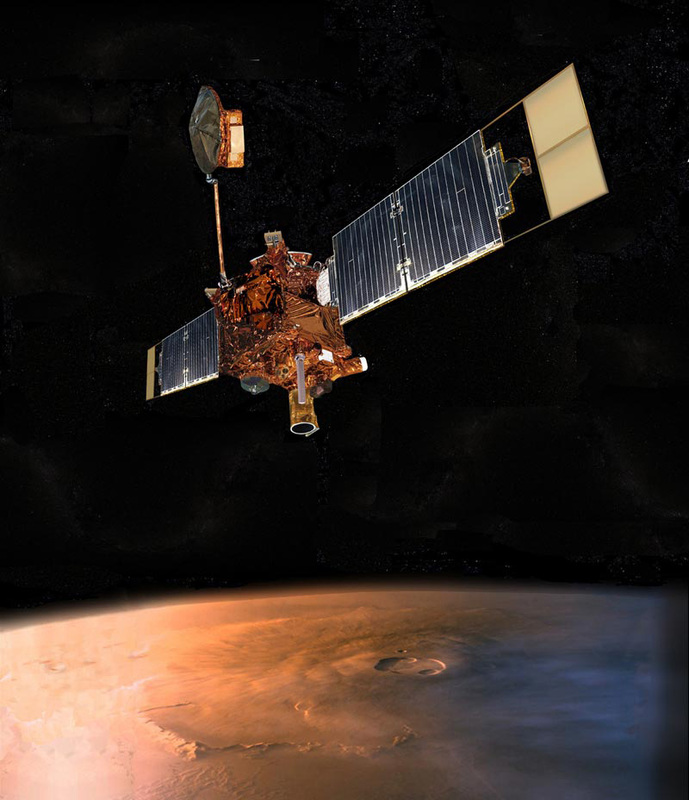
NASA teased us last week with the promise of a “major science finding” regarding our planetary neighbor, Mars. Today they delivered news of an exciting discovery – and no it’s not Mark Watney or even little green men. Using data collected by the Mars Reconnaissance Orbiter (MRO), scientists have detected evidence of salty water flowing on the surface of Mars.

Water is one of the key ingredients for life as we know it. We’ve known for a while that Mars has frozen water at its poles, and earlier this year the Curiosity rover detected the possibility of salty water below the surface, but this is the first evidence for it flowing on the surface.

During the warm seasons, temperatures on the Red Planet reach about 250-300 Kelvins (-23 to 27 degrees Celsius, -10 to 80 degrees Fahrenheit) and in order for liquid water to survive (even temporarily) on the surface of Mars today, it would have to contain some salt. Both remote and in-situ investigations have shown that various salts, such as perchlorates, sulfates, and chlorides are present on the Martian surface. These salts can significantly lower both the freezing point and the evaporation rate of water, and also easily absorb moisture from the atmosphere.

Recurring slope lineae ) – thin, dark streak-like gullies seen creeping down the sides of craters – have been spotted by MRO in low and mid-latitudes on the Red Planet. High-resolution images from MRO’s HiRISE camera show that the RSL are typically less than 5 meters (16 feet) wide, appear on slopes during the warmer months, lengthen and fade away during the cooler months. Scientists first proposed the idea that the RSL could be a product of seasonal water flows back in 2007, but there was no direct evidence to support that until now.

Spectral data from MRO’s Compact Reconnaissance Imaging Spectrometer for Mars instrument (CRISM) observed four different locations where the RSL are most extensive. The data showed evidence of three different hydrated salts – magnesium perchlorate, magnesium chlorate and sodium perchlorate – at all four locations, indicating that salty water (also called brine) flows are responsible for the RSL activity.


Image credit: NASA/JPL/University of Arizona

Scientists now know that salty water flowing downhill is behind the RSL, but where does the water come from? There are a few possibilities, but researchers have yet to narrow it down. The water could form by the melting of surface or subsurface ice, but the likelihood of near-surface ice around the equatorial region is slim. Another possibility is the seasonal discharge of a local aquifer, but also unlikely. Since the salts have the potential to absorb moisture from the atmosphere through a process known as deliquescence, that could be another possibility.

Here on Earth, in the Atacama Desert, we know that the deliquescence of certain salts offers the only known refuge for active microbial communities. If RSL form as a result of deliquescence of perchlorate salts, they could have major astrobiological implications.

The findings have been published in Nature Geosciences and provide new insight into the current Martian hydrologic cycle.


Picture

SR-71 Blackbird Pilots Troll Navy Pilot and Civilian Aircraft With Ground Speed Check

9/21/2015

 
Picture
This is an older story (obviously, since the SR-71 isn’t in official use anymore), but still a good one.

The following passage is from a now out of print book called Sled Driver by Brian Shul (you can still get a used copy on Amazon for around $700).

Here’s the ultimate aviation troll:

There were a lot of things we couldn’t do in an SR-71, but we were the fastest guys on the block and loved reminding our fellow aviators of this fact. People often asked us if, because of this fact, it was fun to fly the jet. Fun would not be the first word I would use to describe flying this plane. Intense, maybe. Even cerebral. But there was one day in our Sled experience when we would have to say that it was pure fun to be the fastest guys out there, at least for a moment.


It occurred when Walt and I were flying our final training sortie. We needed 100 hours in the jet to complete our training and attain Mission Ready status. Somewhere over Colorado we had passed the century mark. We had made the turn in Arizona and the jet was performing flawlessly. My gauges were wired in the front seat and we were starting to feel pretty good about ourselves, not only because we would soon be flying real missions but because we had gained a great deal of confidence in the plane in the past ten months. Ripping across the barren deserts 80,000 feet below us, I could already see the coast of California from the Arizona border. I was, finally, after many humbling months of simulators and study, ahead of the jet.

I was beginning to feel a bit sorry for Walter in the back seat. There he was, with no really good view of the incredible sights before us, tasked with monitoring four different radios. This was good practice for him for when we began flying real missions, when a priority transmission from headquarters could be vital. It had been difficult, too, for me to relinquish control of the radios, as during my entire flying career I had controlled my own transmissions. But it was part of the division of duties in this plane and I had adjusted to it. I still insisted on talking on the radio while we were on the ground, however. Walt was so good at many things, but he couldn’t match my expertise at sounding smooth on the radios, a skill that had been honed sharply with years in fighter squadrons where the slightest radio miscue was grounds for beheading. He understood that and allowed me that luxury.

Just to get a sense of what Walt had to contend with, I pulled the radio toggle switches and monitored the frequencies along with him. The predominant radio chatter was from Los Angeles Center, far below us, controlling daily traffic in their sector. While they had us on their scope (albeit briefly), we were in uncontrolled airspace and normally would not talk to them unless we needed to descend into their airspace.

We listened as the shaky voice of a lone Cessna pilot asked Center for a readout of his ground speed. Center replied: “November Charlie 175, I’m showing you at ninety knots on the ground.”

Now the thing to understand about Center controllers, was that whether they were talking to a rookie pilot in a Cessna, or to Air Force One, they always spoke in the exact same, calm, deep, professional, tone that made one feel important. I referred to it as the ” Houston Center voice.” I have always felt that after years of seeing documentaries on this country’s space program and listening to the calm and distinct voice of the Houston controllers, that all other controllers since then wanted to sound like that, and that they basically did. And it didn’t matter what sector of the country we would be flying in, it always seemed like the same guy was talking. Over the years that tone of voice had become somewhat of a comforting sound to pilots everywhere. Conversely, over the years, pilots always wanted to ensure that, when transmitting, they sounded like Chuck Yeager, or at least like John Wayne. Better to die than sound bad on the radios.

Just moments after the Cessna’s inquiry, a Twin Beech piped up on frequency, in a rather superior tone, asking for his ground speed. “I have you at one hundred and twenty-five knots of ground speed.” Boy, I thought, the Beechcraft really must think he is dazzling his Cessna brethren. Then out of the blue, a navy F-18 pilot out of NAS Lemoore came up on frequency. You knew right away it was a Navy jock because he sounded very cool on the radios. “Center, Dusty 52 ground speed check”. Before Center could reply, I’m thinking to myself, hey, Dusty 52 has a ground speed indicator in that million-dollar cockpit, so why is he asking Center for a readout? Then I got it, ol’ Dusty here is making sure that every bug smasher from Mount Whitney to the Mojave knows what true speed is. He’s the fastest dude in the valley today, and he just wants everyone to know how much fun he is having in his new Hornet. And the reply, always with that same, calm, voice, with more distinct alliteration than emotion: “Dusty 52, Center, we have you at 620 on the ground.”

And I thought to myself, is this a ripe situation, or what? As my hand instinctively reached for the mic button, I had to remind myself that Walt was in control of the radios. Still, I thought, it must be done – in mere seconds we’ll be out of the sector and the opportunity will be lost. That Hornet must die, and die now. I thought about all of our Sim training and how important it was that we developed well as a crew and knew that to jump in on the radios now would destroy the integrity of all that we had worked toward becoming. I was torn.

Somewhere, 13 miles above Arizona, there was a pilot screaming inside his space helmet. Then, I heard it. The click of the mic button from the back seat. That was the very moment that I knew Walter and I had become a crew. Very professionally, and with no emotion, Walter spoke: “Los Angeles Center, Aspen 20, can you give us a ground speed check?” There was no hesitation, and the replay came as if was an everyday request. “Aspen 20, I show you at one thousand eight hundred and forty-two knots, across the ground.”

I think it was the forty-two knots that I liked the best, so accurate and proud was Center to deliver that information without hesitation, and you just knew he was smiling. But the precise point at which I knew that Walt and I were going to be really good friends for a long time was when he keyed the mic once again to say, in his most fighter-pilot-like voice: “Ah, Center, much thanks, we’re showing closer to nineteen hundred on the money.”

For a moment Walter was a god. And we finally heard a little crack in the armor of the Houston Center voice, when L.A.came back with, “Roger that Aspen, Your equipment is probably more accurate than ours. You boys have a good one.”

It all had lasted for just moments, but in that short, memorable sprint across the southwest, the Navy had been flamed, all mortal airplanes on freq were forced to bow before the King of Speed, and more importantly, Walter and I had crossed the threshold of being a crew. A fine day’s work. We never heard another transmission on that frequency all the way to the coast.

For just one day, it truly was fun being the fastest guys out there.


Confirmed: The CIA's most famous ship headed for the scrapyard

9/8/2015

 
Picture
The Hughes Glomar Explorer was more than just a giant ship — it was a giant secret, possibly the biggest and strangest covert operation the CIA pulled off during the Cold War. But now, 40 years after its original mission, it’s finally headed to the scrapyard.


The ship, now called GSF Explorer, had been retrofitted for oil drilling and exploration since it left US Navy service in 1997. But with the price of oil falling worldwide, its owner Transocean has decided to scrap it, along with several other vessels.

The ship’s origin story began in March 1968, when a Soviet Golf II class ballistic missile nuclear submarine, the K-129, sank in the Pacific Ocean. This was at the height of a high-risk cat-and-mouse game between the USA and the USSR. After the Soviet Navy failed to pinpoint the location of the wreckage, the US Navy found it. So the CIA decided to raise it off the seabed. They called this mission “Project Azorian,” and its details have been an official secret for decades. It took three years for retired CIA employee David Sharp to get permission to publish in 2012 his account of the mission and his role.

Sharp was at the engineering meetings where they tried to come up with a way to do what was at the time considered impossible, to pull up a huge object from an ocean depth of nearly 17,000 feet, or three miles.

“I think given a better background in marine engineering, we likely would not have tried” what they did, Sharp says. Luckily, the CIA also brought in skilled contractors like the deepwater drilling experts Global Marine (whose truncated name “Glomar” adorns the vessel).

What they designed may never be seen again: The Hughes Glomar Explorer itself was massive — too wide to fit in the Panama Canal — and it was built to heave up and down on waves while its center held steady, lifting an enormous claw with the K-129 wreckage inside. Every piece of this hydraulic lifting apparatus was its own engineering nightmare, from the gymbals with bowling-ball-sized ball bearings, to the heave compensators and derrick that had to handle 14 million pounds of submarine, claw, and heavy pipe string. Lockheed engineers designed the “claw” itself, more accurately called a “capture vehicle,” and got it into the HGE via an elaborate submersible barge (echoes of which a few people detected during the 2013’s not-as-awesome Google Barge mystery).


Lockheed built the submersible "Hughes Mining Barge" to place a submarine capture vehicle inside Hughes Glomar Explorer without detection.


It would be impossible for the US military to build such a huge and complicated ship, or to bring it out on the high seas, without getting the attention of the Soviets. Hence the true wonder of Project Azorian: its commercial cover story, one that puts the movie “Argo” to shame. From about 1970-74, the CIA managed to convince the world that billionaire inventor Howard Hughes had decided to invest millions to mine “--,” balls of heavy metals that lie on the ocean floor. Via fake press releases, events, technical specs and front companies, the CIA convinced the world that Hughes was leading a new ocean-mining rush.

In the end, the expensive mission was only a partial success: the ship’s lifting apparatus broke apart about 9000 feet below the surface, and the majority of the K-129 fell back to the floor of the ocean. It was impossible to retrieve without building a new claw, and before that could happen, details of the mission broke in the press. That didn’t stop the CIA from trying to keep it under wraps for as long as possible, leading to its notorious “Glomar Response” to Freedom of Information Act requests: the non-answer “we can neither confirm nor deny the existence of the materials requested.” That answer has held up in court over the decades and proliferated among federal and even local government agencies.

It was also the inspiration for the extra-dry humor of the CIA’s first tweet.

Hughes Glomar Explorer entered popular culture in other ways, as conspiracy theories have swirled around the K-129 and the mission to retrieve it. One of them is promulgated in the 2005 book “Red Star Rogue” by Kenneth Sewell and Clint Richmond. The book became the basis of the 2013 drama "Phantom," which features Ed Harris and David Duchovny as Soviet military officers who sip vodka in a very un-Russian way. 

In 2006, the American Society of Mechanical Engineers declared Hughes Glomar Explorer an historic landmark. “Grasping and raising a 2,000-ton object in 17,000 feet of water in the central Pacific Ocean was a truly historic challenge, requiring a recovery system of unprecedented size and scope,” ASME wrote.

Americans can remember the whole affair for its daring, hubris, disappointment and secrecy. But for the loved ones of the Soviet sailors who died on the K-129, the words “Hughes Glomar Explorer” are more bitter. The Soviet government tried for 30 years to keep the fate of the submarine a secret from the families. After the USSR fell apart, both the Russian and US governments decided to make a clean slate of it, and then-US Defense Secretary Robert Gates delivered some of the intelligence on Project Azorian to the Russian government, along with artifacts from the chunk of the submarine the CIA managed to retrieve.

Gates also released a secret video of a funeral at sea for the remains of six Soviet sailors that were pulled up from the ocean floor. It remains one of the strangest artifacts of the entire Cold War — the other being ship itself, but it appears that one will not be with us for much longer.

Giant floating Museum of Secrecy, anyone?


    ///

    Categories

    All
    Automotive
    Aviation
    Extreme Sports
    Extreme Sports
    History
    Marine
    Miscellaneous
    Motorcycle
    Nathan Finneman
    Off Road
    Off Road
    Travel

    Archives

    January 2024
    December 2023
    February 2023
    September 2022
    March 2022
    February 2022
    December 2021
    March 2021
    January 2021
    September 2020
    August 2020
    July 2020
    April 2020
    March 2020
    February 2020
    January 2020
    June 2019
    May 2019
    April 2019
    February 2019
    January 2019
    December 2018
    November 2018
    October 2018
    August 2018
    April 2018
    March 2018
    February 2018
    January 2018
    December 2017
    November 2017
    October 2017
    September 2017
    August 2017
    July 2017
    June 2017
    May 2017
    March 2017
    February 2017
    January 2017
    December 2016
    November 2016
    October 2016
    September 2016
    August 2016
    July 2016
    June 2016
    May 2016
    April 2016
    March 2016
    February 2016
    January 2016
    September 2015
    June 2015
    March 2015
    February 2015
    January 2015
    December 2014
    November 2014
    October 2014
    September 2014
    June 2014
    May 2014

    RSS Feed

Site powered by Weebly. Managed by JustHost